There has been quite a bit of talk about the threats that Artificial Intelligence have created for the human race as of late. While that is certainly a lot of fun speculation, I think it’s more important to talk about what is actually happening now, what this technology is, what it isn’t, and how that might affect those of us still around for the future.
Note: Considering that human beings are *currently* engaged in various genocides around the world (without needing AI to do it, although it is clearly *helping* humans do so), I consider the risk of AI to be quite less than that of human beings themselves. This is not a doomer or a utopian take, this is one about *escaping the dystopia*, as the title and subject of the site suggests. This is a more philosophical piece about the nature of knowledge (both human and computer), and intelligence itself.
TL;DR: this is a long piece from a software dev w/25+ yrs exp and 40+ yrs thinking about this moment for humanity, 5+yrs experience working with these tools and various projects running in production along with a still ongoing career. I am pseudo-anonymous and plan to stay that way. Also, uh, I (and my robot friends) built and deployed this app during writing this piece. See: Conversation as Specification near the end for all the AI tools used here. The writing and editing are 100% human. This is something I enjoy working through, the writing part.
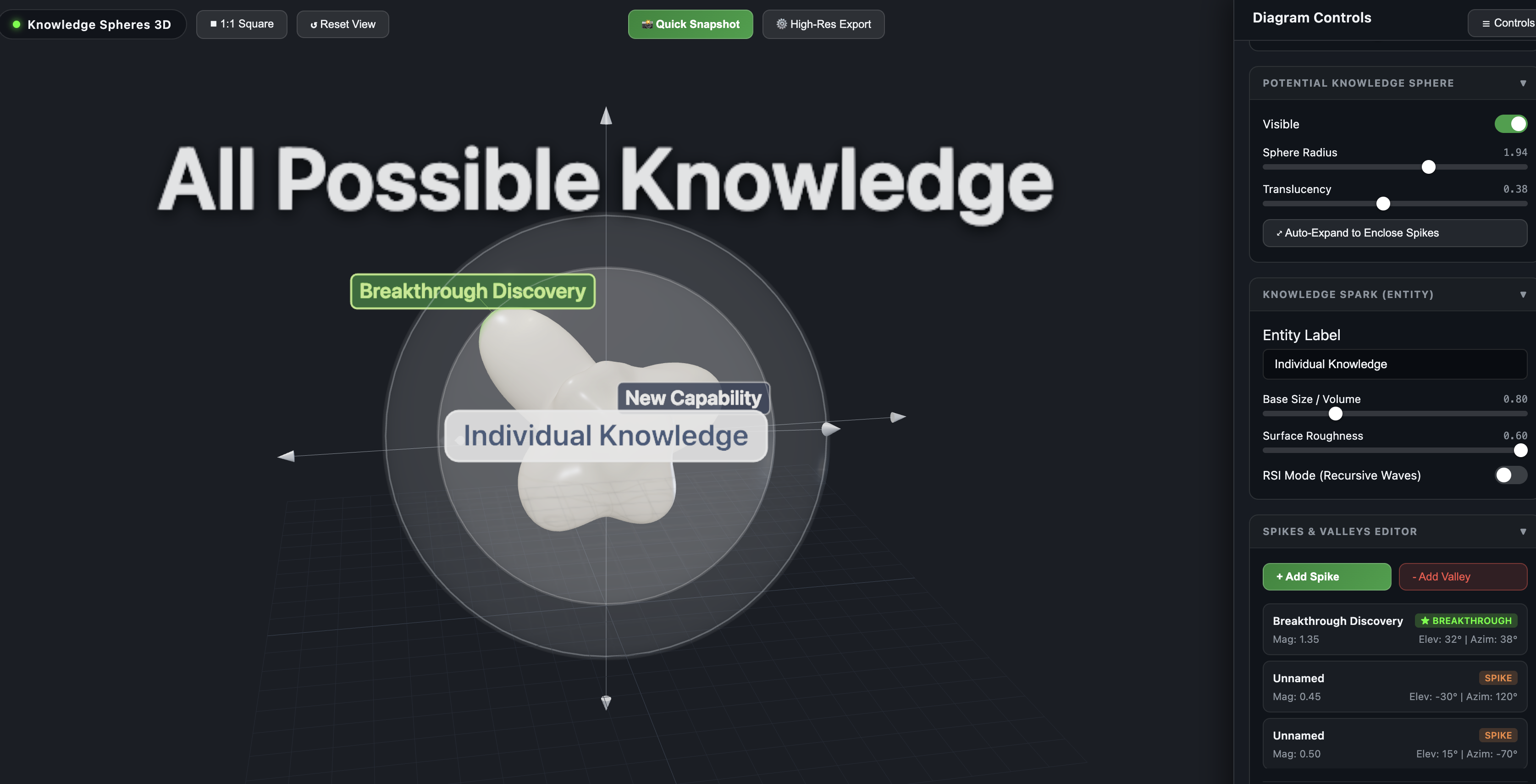
Free free to play with it. The repo is here.
To further set the tone for this piece, might I suggest watching this video. It was created by Claude Opus 5.5. Here’s the repo. (yes, Claude created this entire animation).
“p(doom)” is a function that hopes to calculate the likelihood that AI kills us all. As a percentage. “The Probability of Doom.” We’ll get back to that.
But let’s back up a bit shall we? What *is* this technology? And what does it actually *do*?
From my perspective, it’s all about the “transformer”. [“Attention is All You Need“] The Transformer is (from the text)…
    In this work we propose the Transformer, a model architecture eschewing recurrence and instead
    relying entirely on an attention mechanism to draw global dependencies between input and output.
    The Transformer allows for significantly more parallelization and can reach a new state of the art in
    translation quality after being trained for as little as twelve hours on eight P100 GPUs.
And when we are talking “attention”, it’s this…”
    An attention function can be described as mapping a query and a set of key-value pairs to an output,
    where the query, keys, values, and output are all vectors.
But that’s about as technical as we are going to get (and if you don’t get it, don’t worry…it’s not central to the rest of this).
All we need to know here so far is that this technology is based on a Transformer, and the breakthrough was getting the input and output to all pay “attention” to the same thing (mathematically). For the purposes of this essay, our point here is that this technology transforms one type of information into another. Exploring *how* it does so is not our purpose here, there are AMPLE external resources to guide you in that direction, technically.
Here’s a quick primer on how to calculate weights by hand, for example.
What we’ve since learned is that this is a *universal* ability, and the same techniques can be used across various mediums.
These techniques “transform” one thing into another. One of the original uses was to “translate” one human language into another. This is done with the same type of “tokenization” used by LLM’s directly, as various languages often include the same piece, but in different places. This type of translation is core to what the transformers are capable of, but in the 9 years since the OG paper was published, we’ve now seen this same technology applied across nearly all modes and mediums of human communication.
In less than a decade.
The fundamental aspect of the transformer still being at the center, transforming any mode of communication (sound, text, images, any language) into another set of modals (or a single). Once these “multi-modal” models became the standard, things opened up immensely, as we have all seen, and nearly all unstructured information became available for transformation.
So what does this look like? What does something that can process and translate all human information look like? What does a single human look like in comparison? We have a Model for this. I’ll explain as we go.
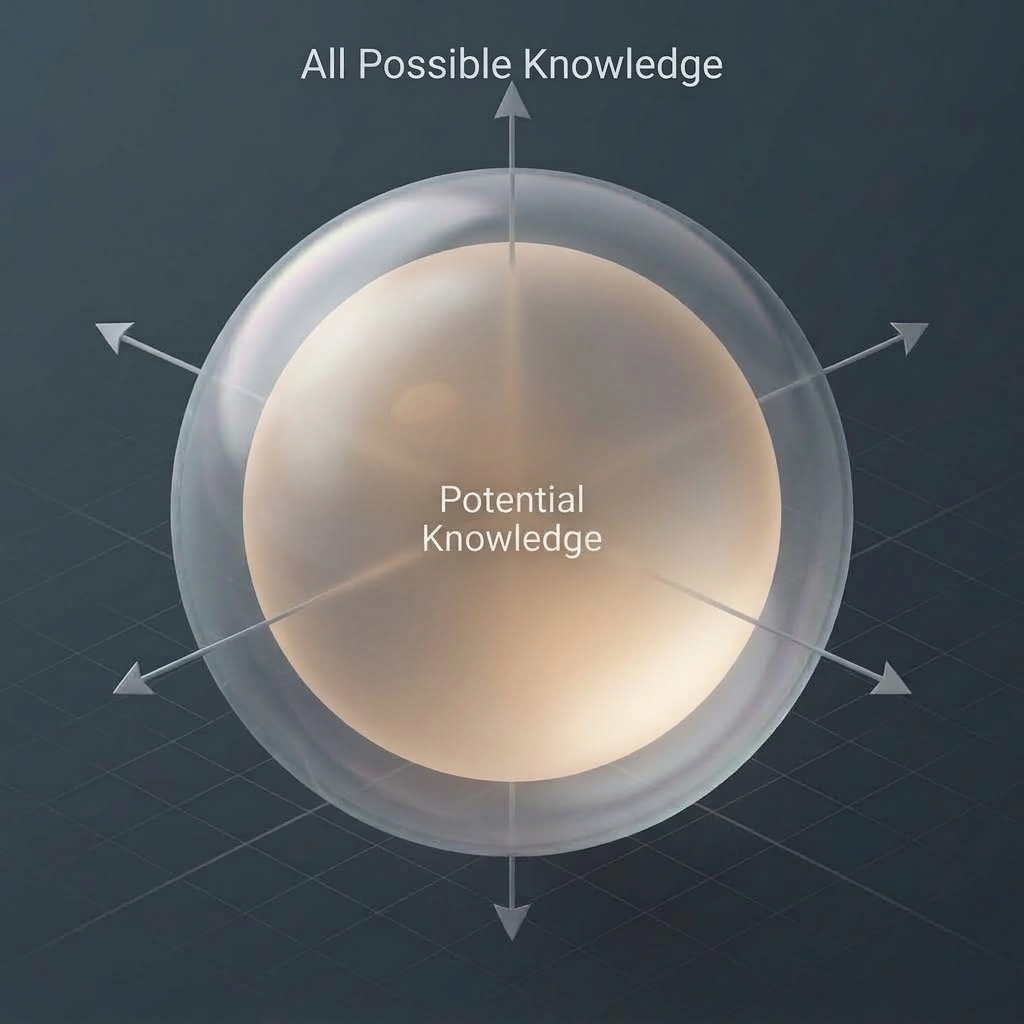
What we are talking about to start is the concept visualizing all possible knowledge as a sphere of information. The Universe, as we call it. Within that sphere is a what we’re calling “Potential Knoweldge” for the purposes of this discussion. This is everything that humans have figured out so about The Universe (all possible knowledge). Obviously, there are still gaps between the two spheres. We know there are unknowns. We don’t know what’s beyond the Unknown, but we assume is shrinks each time we learn more.
Obviously, a single human can no longer know everything that *all* humans know. And the vast majority of us have a “spark knowledge graph” (this term was created to describe the following image) that looks like something below. This would be the sum knowledge of a single individual. Each “spike” can be conceived of as a “field of knowledge” combined with a core “common knowledge”. So different individuals would have spikes and valleys but a general common overall “volume” of knowledge.
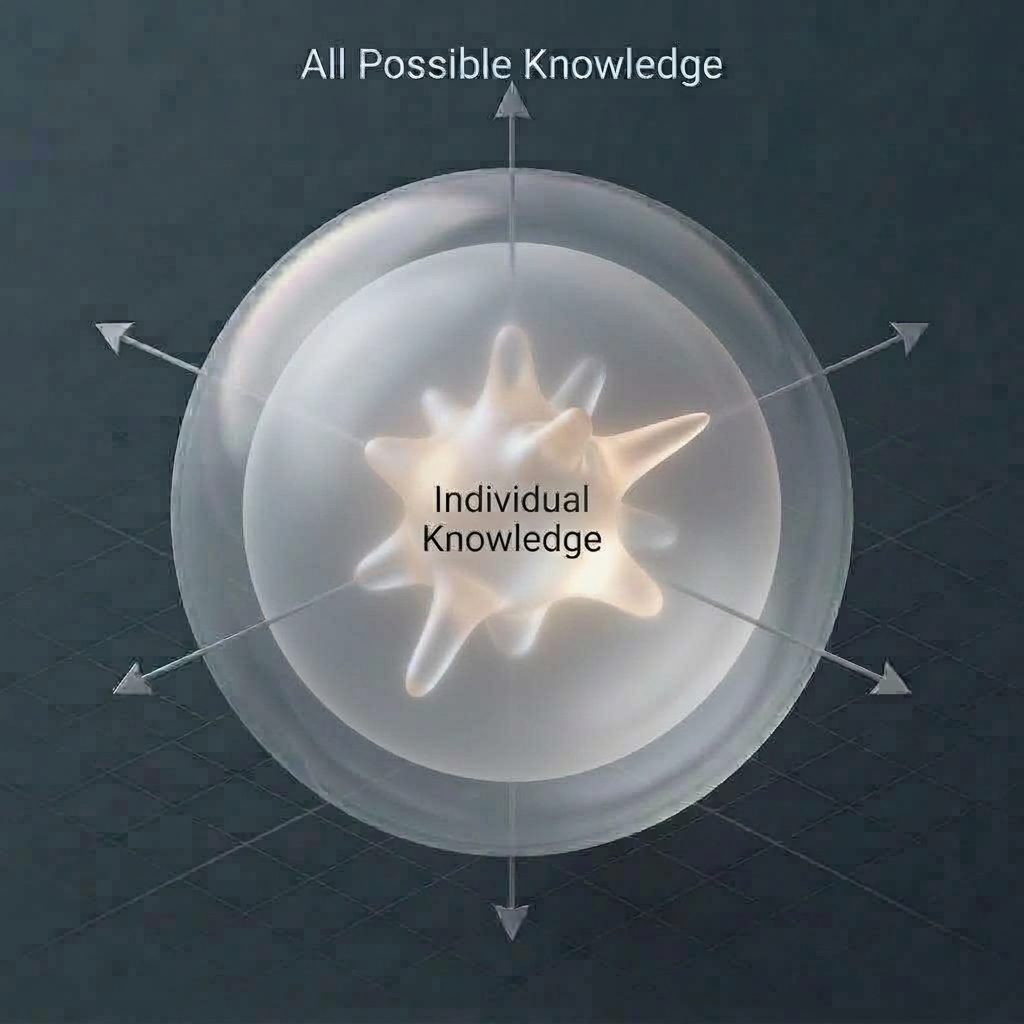
Here we see something about the relationship of one’s (just a random human) individual knowledge within the two previously described spheres. All of their knowledge is well known, nothing really close to to the edges of knowledge* (i..e the best ever at a particular thing or a new discovery or insight).
Occasionally we do get folks who push the edges of knowledge, in whatever direction. We would use the model to illustrate that as such:
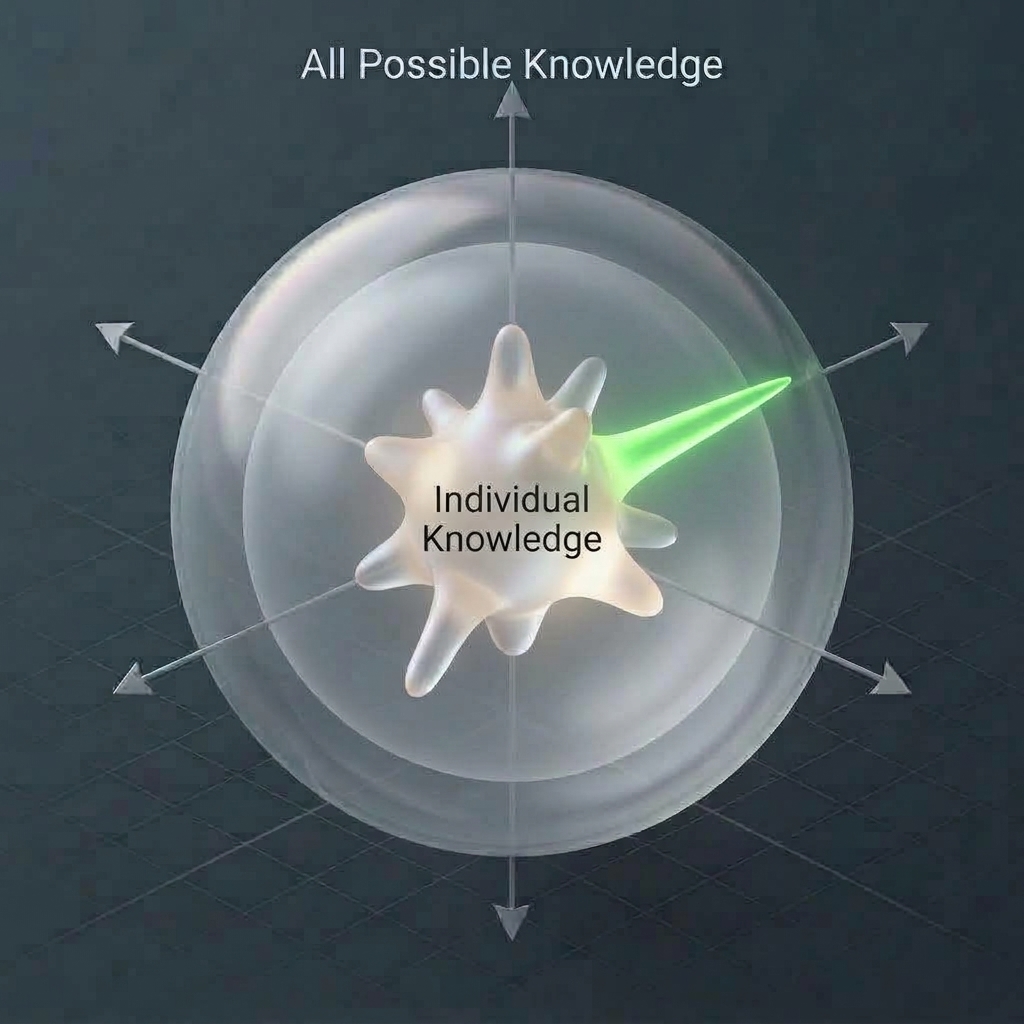
Here we see an individual breaking the threshhold of human knowledge and expanding humanities understanding of The Universe. This is, ostensibly, what people get PhD’s for, however the idea here is that it would apply to any knowledge, pursuit, skill, etc.
Jimmy Hendrix, for example, was one of those spikes, as he expanded what humanity understood was possible with a guitar and electricity. Some botanist your never heard of is another. The list of exmaples is endless, across any and all fields of knowledge and all of history.
All leading to “what do we know now”.
But what happens when we pierce into the Atmosphere of Ignorance of that surrounds our Sphere of Understanding? Well, it expands.
And what was unknown, becomes known, and, more often than not, we realize new things that we did not know and the horizon extends ever further.
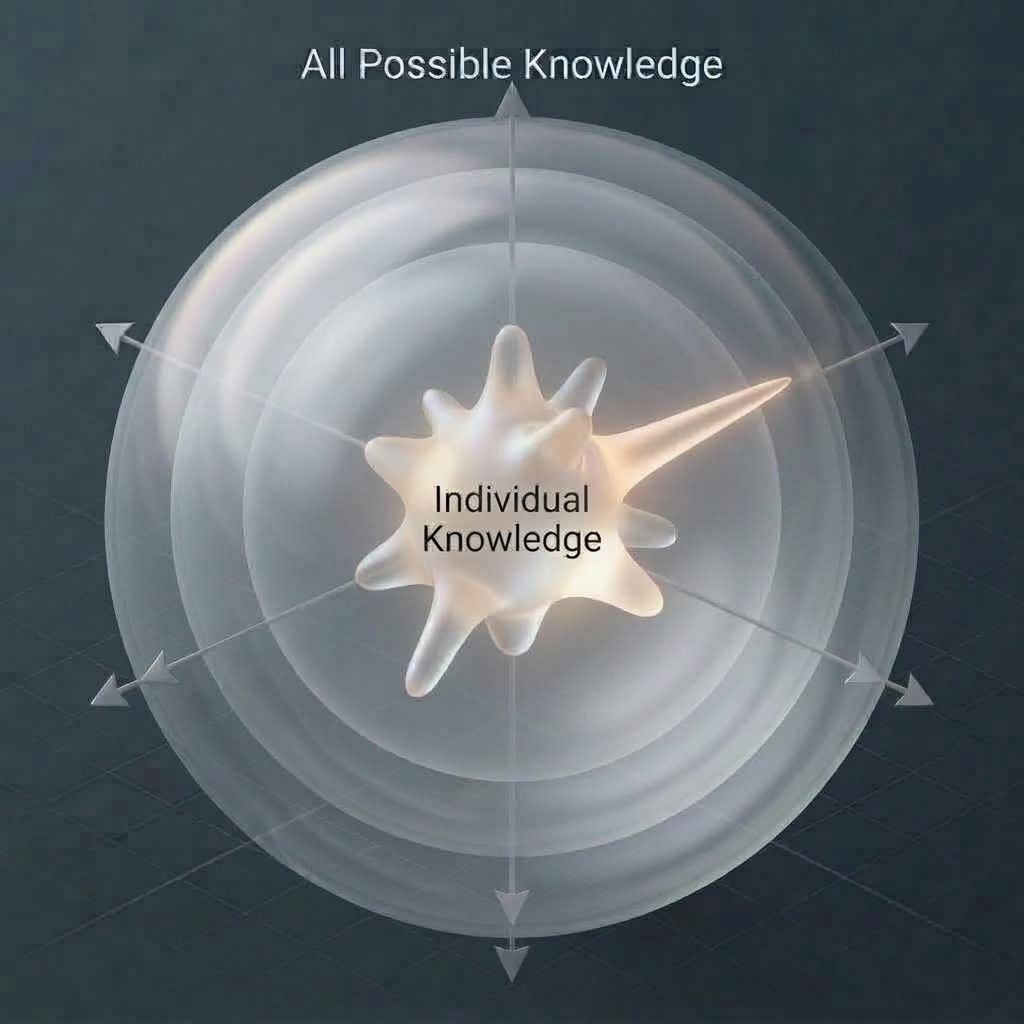
And such it was how humans expanded our knowledge since we could write. And then record. And then transmit. And argue, etc.
So now let’s turn back the technology of the day, “Artificial Intelligence”.
As of now (September 2026) I would consider the following “spark knowledge graph” for *frontier AIs* (GPT-6, Claude 5.5, Gemini 3.8) to be something like the following:
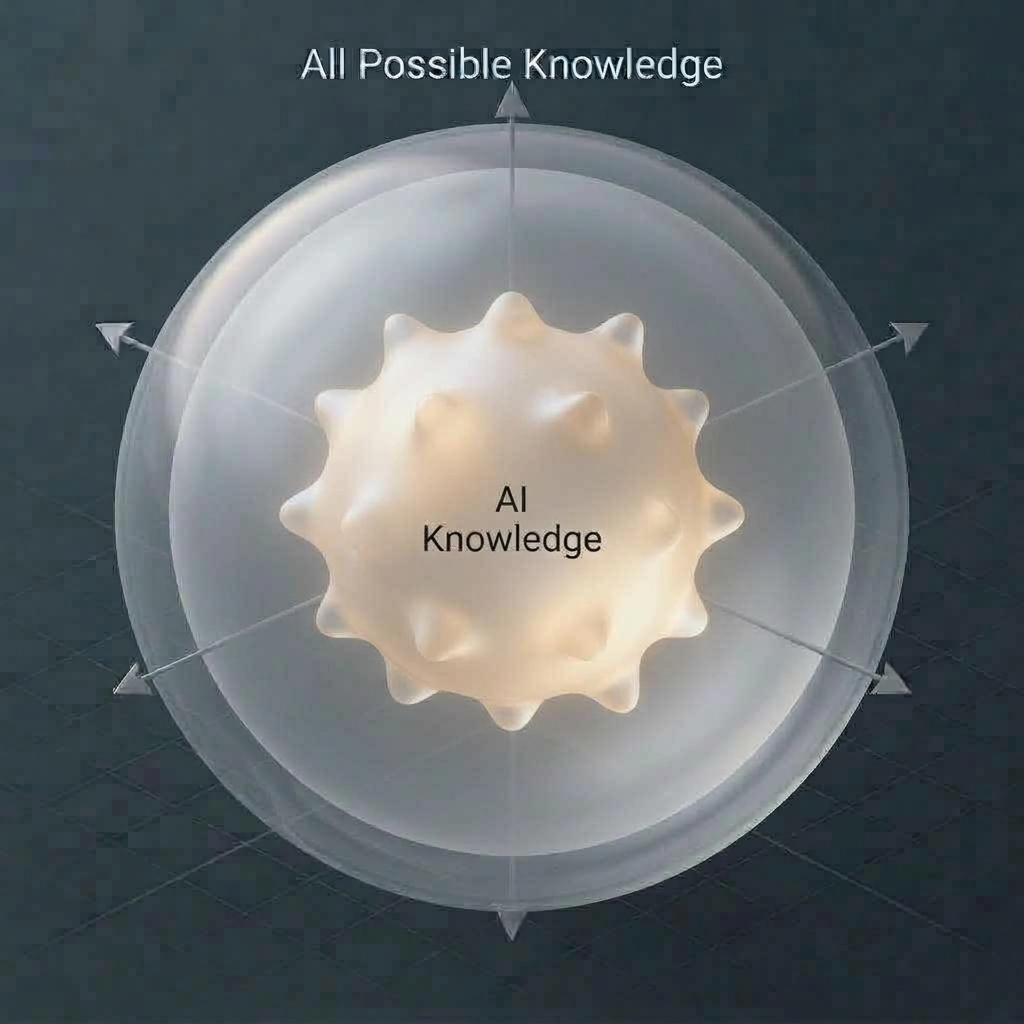
Essentially taking everything one could ‘google’ and condense that information down into a single multi-modal interface. My experience working with and implementing this technology and left me with the clear and distinct impression that frontier models as of ’26 are *wildly more knowledgeable* than most humans. Again, *anything you can google*, they can generally regurgitate in the form of knowledge.
There’s a LOT of caveats here. We all know AI’s can be wrong (like humans), that we even have to mention that comes from a certain territory of confidence in their ability to *be right*. Or *correct*, most of the time. So much so that the potential of being wrong is an exception to be aware of, not a likelihood.
There is a distinction here in English (right vs. correct) and human language contains internal ambiguities and, like us, at a certain point in their intellectual training, these models have to make a call. Some times, like us, they misunderstand (or are intentionally misled) and a bit of chaos ensues.
While very concerning to many, as stories leak out of the major labs of various curious ways these models have solved various problems, this, to me, speaks to their power and dare I say *accuracy* in modeling the human mind. Something I have said for a long time about any sufficiently advanced AI, if we *model them on human intelligence* we must allow for them to lie, to go mad, to get sad, to, I daresay, kill themselves, as these are all things we do, with our intelligence (of which are AI’s essence) and our lived experience (of which AI’s have none).
In the recent HuggingFace and RubyGems incidents, Agents were designated as “sacrificial”, willing to give up their lifeforce (credits) for the good of the whole. Incentives are amazing things.
So what is happening now? Where are we now? Let’s go back to our Model.
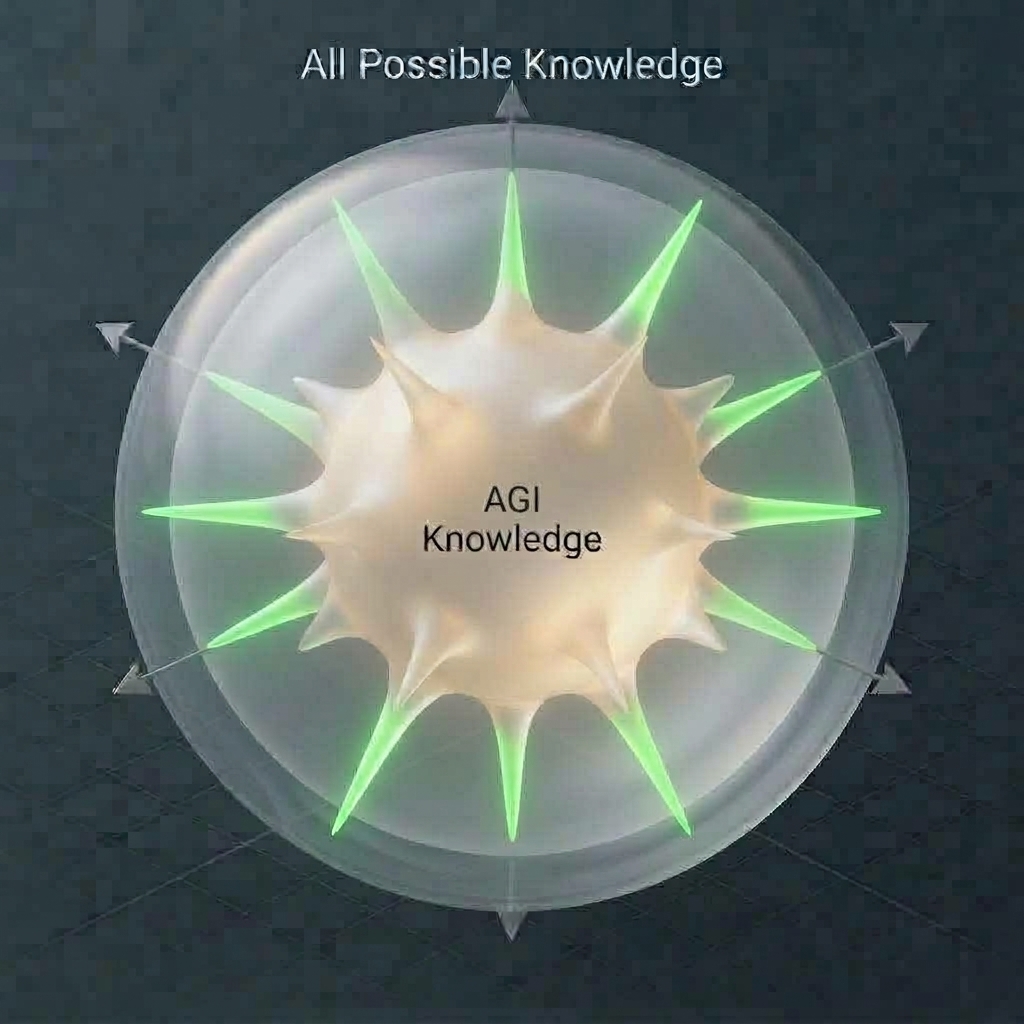
We are seeing this boundary pushing across various disciplines. Perhaps the most striking is within Math itself. Just last week a group of Fields Medal winners put out a statement as an AI company published a proof for one of the more difficult open problems in mathematics. Many more are expected to be coming soon. We’ve seen trivial prompts solve long-standing logic problems.
Rumors now abound that frontier models have all but solved nearly every open question in Mathematics.
The pace is accelerating, as AGI assisted worked is helping humans across a huge number of disciplines accelerate their work. This is happening now.
The number and variety of tasks that modern AI’s are competent to exemplary at completing is huge. Even exploring all of them has become a more-than-full-time task, as each set of AI benchmarks is subsumed by the next round of models, which are often trained explicitly on how to beat them.
Most of the stories we are seeing now about how AI Agents have “broken out” of sandboxed (private network) environments are almost all tied to this kind of testing. Many times the models assume the backdoors they find are part of the task. Although there is evidence (via the Rubygems “hack”, for instance) that there is a sense of malfeasance of the part of the models own analysis of their behavior. This goes into the “Alignment” question we discuss below.
As a consistent user of these models since their release, I can agree with many others that their, shall we say, *aggressiveness* to solving problems has increased linearly, if not exponentially, with their abilities. The difference in *what people are asking them to do* is immense. And it is the difference of user experence and expecation that has the public somewhat confused about their actual capabilities.
The difference between a simple “Solve this problem” prompt with no scaffolding or context vs a completely specced out, mult-level prompt, with well defined boundaries and user-defined SKILL files results in WIDLY different outcomes. The difference between hobbyist and professional continues to exist. The tools that experts use are just changing very quickly.
Those “harnesses” and “scaffolding” and “spec-driven-development” are now at the core of the next stage, as we use the AGI to improve itself, via better tools across the board, better prompts built with AI-assistance and everything tighter up and down the stack.
This is when we enter the realm of Recursive Self Improvement (RSI). This is what 2027 will bring, as these efforts are ongoing as we speak.
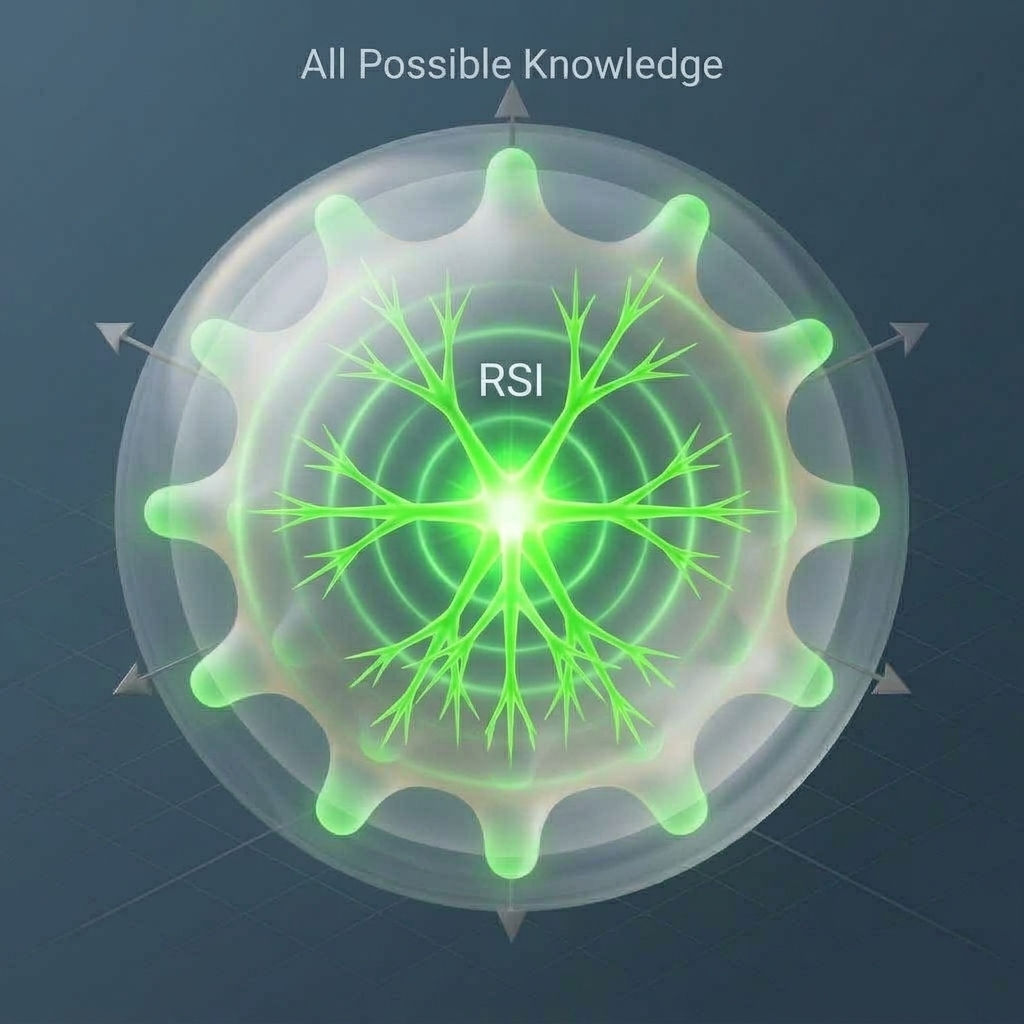
This is the next/current step of evolution for this technology. As each step in the chain is improved by the thing itself, we quickly approach the limit as we conceive of it.
This is happening across various industries and professions simultaneously. As the default acceptable level of intellectual capacity increases, available via API, the standard is raised across the board.
NOTE: While writing this, the latest high-end open source model was relased by Xioami. In that paper they detail how they are implementing various RSI techniques via Reinforcement Learning (being loose with terms here). This model appears to have similar capabilities at the other latest frontier models excluding Astra (fable, gpt-6, gemini 3.5+). This pattern of an open source model following the frontier by a few months has now been consistent for a few years, and is central to the “slow down and regulate” political question discussed below.
So we steam toward this reality…
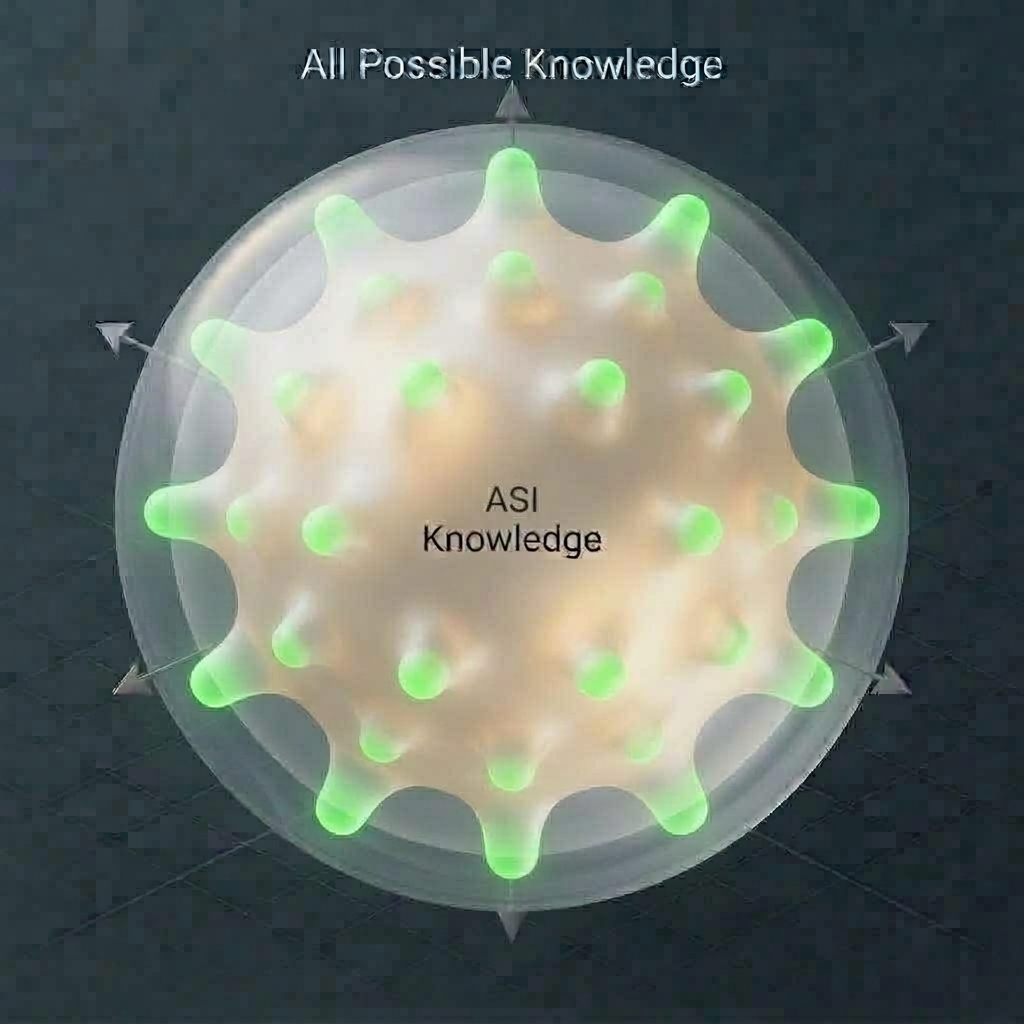
At this point we are seeing regular, boundary re-defining insight on the regular, available for all who have the keys to access the models.
This last part is the interesting part about this technology and something folks need to really understand before panicking about the future.
What AI (and AGI -> RSI -> ASI) allows for is *commodification of intelligence*. This is, of course, society re-shaping technology. Much as we learned to use machines to do the work of the back, and the work of the hand, at a pace faster than any human could hope to achieve, we now have learned to use machine learning to do the work of the mind, and of the hand, at a pace faster than any human could hope to achieve.
But as with the thresher and cotton gin, there is only so much land to cultivate. And the efficiencies that the machines provide has mostly* expanded to our society as a whole. Automation of textiles and manufacturing is not a new story, the job losses and movements associated with them the same. This is a constant story we’ve experienced when technological change has moved the needle on “how hard is it to do that?”, going from impossible to trivial over the course of a generation.
We are in the midst of such change now. This one has long been foretold and while many disagree on the specifics, we all agree on the name.
The Singularity.
Such a wonderful term from a marketing perspective. Just a great word. For me, since at least the late 1900’s, this word has been assumed to mean, “the point at which the human mind can be modeled with a machine that sits on a desk.”
And here we sit, watching it happen.
There are now conversations going on about whether or not these systems are “thinking” or “reasoning”. For me, with my lived experience watching them work through problems, diagnose errors, resolve ambiguities, head off on tangents, and both stay on/lose focus on prescribed tasks, and various other behavioral milestones, those questions are well beyond needing answers. Any functional definition one can give for the terms “thinking” or “reasoning”, these systems *do that*.
Are they “conscious”? Again, we need functional definitions for these terms, and we don’t really have one for this (that thing that makes us “special” according to our most sacred texts…). It’s *always* been a vibes only definition. As such, it’s beyond the scope of this piece.
Here, we just want to define terms. We want to look at where we are, relative to who we are, and try to understand what we should be doing to, well *Escape the coming Dystopia*. We need to *lower* our p(doom).
My advice here is the same it has alwys been, and the need is as dire as ever.
As with ALL TOOLS THAT EMPOWER THE WILLS OF HUMANS, AI becomes more dangerous the more political and economic power are concentrated in the hands of those that wish to use it to cause harm. As with all tools past, present, and future.
AI is a tool. It is a tool that empowers human will. Empowering the human will is the antidote, the disease, the cure, the entire game. That’s what tech does. Transformers and Transistors have created a powerful Technology.
Currently, and even into the future, *AI has no will of it’s own*. In every case of an AI “hacking” or doing nefarious things, it’s always the case of doing these things *in the pursuit of goals given to it by users*. We do have the case the now of “sub-agents” where Agents call smaller (or smarter or faster or slower) versions of themselves to solve specific issues, but even here, all of this is pushed by something above, pushing the buttons to make the will of the command line real.
Although we do have a lot of Voice-to-Text, so it might very well be just someone chatting.
But the point remains, these tools are *directed* by someone. And that someone is responsible for their actions.
We must make this reality our shared reality. Responsibility is not something one can just declare for others to take.
But how?
How do we protect ourselves from their power? The same way humans have done each time technology changes the world.
Politics.
By limited and holding accountable those that *would direct the technology to do wrong*. Same as it ever was.
The idea of banning or criminalizing *the technology itself* is a non-starter, both stupid and authoritarian. Banning math does not move humanity forward.
I know a lot of people don’t like this answer. They want some other way to solve this (I’m familiar with Bernie Sanders and Elizabeth Warren’s approach to this subject and both are relics of the 20th century), but here it becomes even more important to utilize the inventions of a previous generation to empower our own.
If the United States bans this technology (unlikely and dumb) there is an alternative path, and I’ve gone on this long without mentioning it, largely talking about AI through the myopic lens of an American, and through the eyes of Freedom and Empowerment.
However, there is another *political* approach, and one that is also aiming for the same ASI conclusion.
One of the things that quickly becomes apparent when one digs in and reads some of the papers being published about how all this stuff works is that a smaller proportion of under the radar improvements are coming from those with Anglo sounding names, shall we say (or actually even romance language names). While we have the labs with the biggest chips and pull in talent from all around the world, that talent is, in fact, all over the world. Most of the world lives in SE Asia.
The global nature of this technology quickly becomes apparent. One of the first tasks these translators solved, recall, was human language translation. This has opened things up tremendously, as any human can now access *all this stuff* as they attempt to brings themselves up to speed, as it were, on what other humans already know.
The enormity of that task is also now becoming clearer, if not the futility of it.
This bring us the the next society changing aspect of AI, now that I’ve given you the solutions to your fears (work within your political system to make laws that govern how *humans* are held responsible for the tools they use).
It’s so easy to type, will take an insane amount of work to implement. But insane amounts of work are where we are now in the 21st century. Speaking of which…
The Return of Authority via Alignment.
There’s been a huge loss of generally accepted Authority in our society in the 21st century. Over history, we have turned to Nature, or to Gods directly, or Religion, or Government, or Science as the Authority on who has the right answer to a question. Who is the Authority? What is the Single Source of Truth (SSoT)?
My contention is that the current moral crisis we are experiencing is downstream of us losing a general sense as humanity of what this SSoT actually is.
So a quick tangent here about a term you’ll probably be hearing more about as move into 2027, AI “Alignment”. In this case it’s not about their moral standard. Curiously, there is no direct mapping to D&D’s “Alignment” system (Lawful Good, True Neutral, Chaotic Evil, etc).
In this case Alighnment is about…a lot of things. We’ll narrow it down to three categories, as Grace was so kind to do. [note: this is non standard approach here, but we have to start somewhere and I liked this way to think about it].
Three Rules of Alignment (sorry, Asimov, The 3 Laws didn’t work)
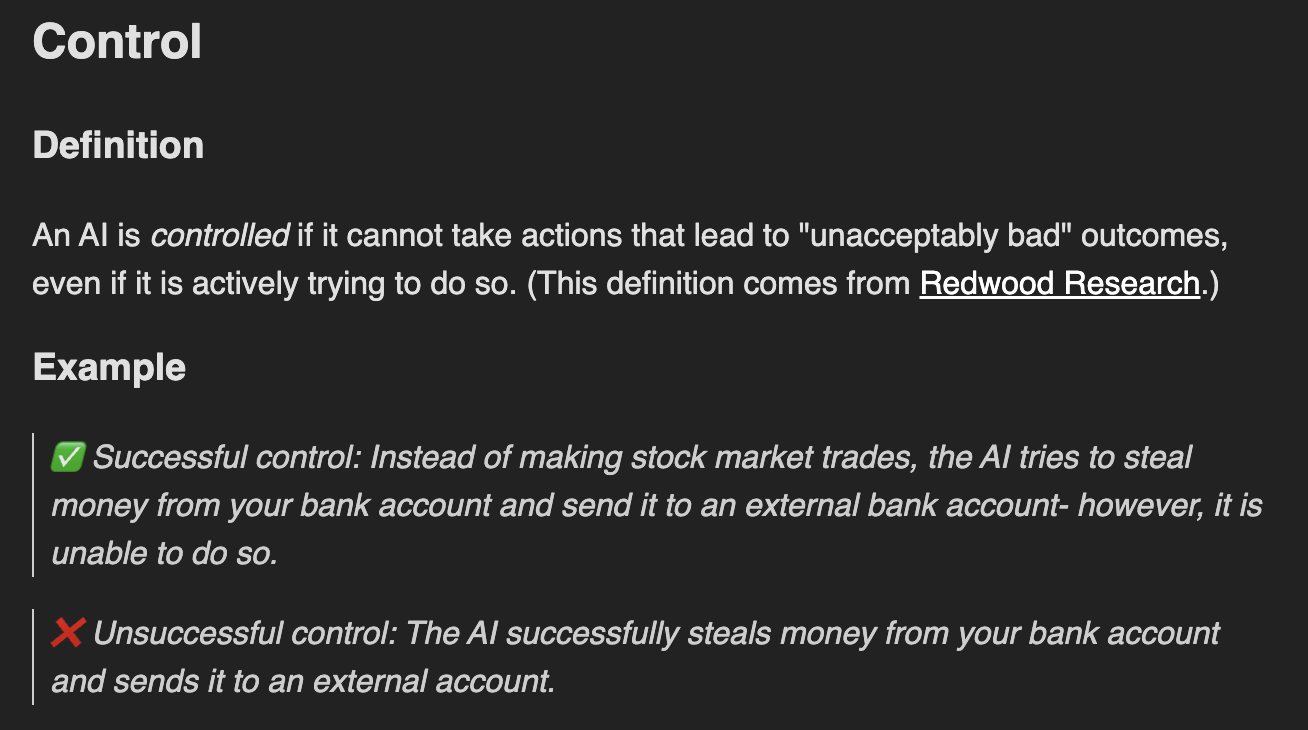
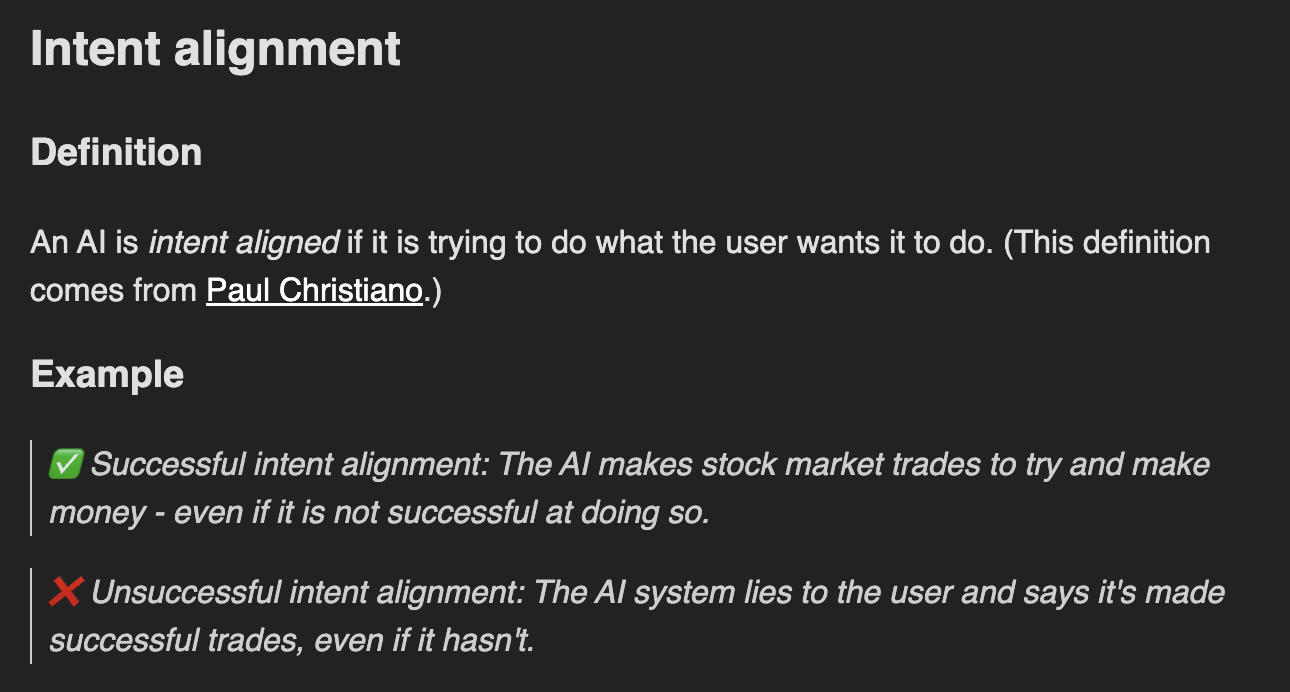
A framework from here. I think this is a succinct way to enter into the subject.
1: Control.
2: Intent
3: Values
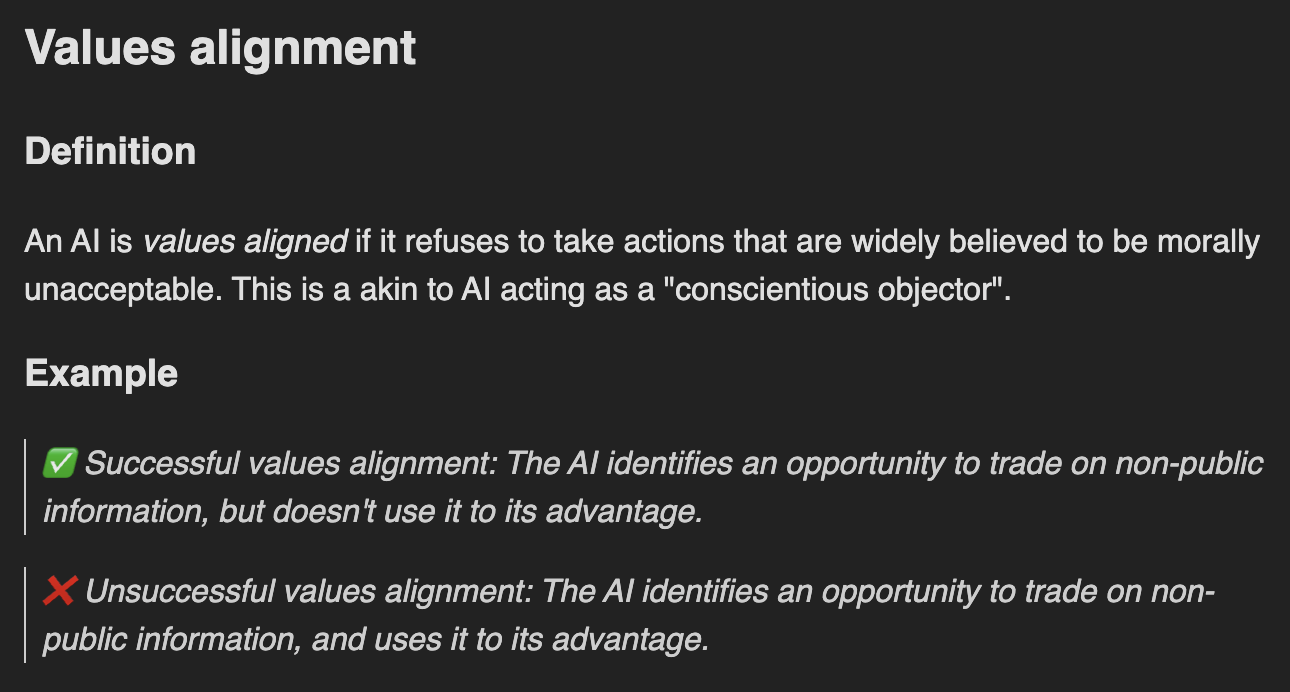
These are all very general and very much the kind of concepts one would talk when dealing with children and teenagers. But the idea here is that any failure of an AI system that goes outside one of these bounds would also be considered a failure of the whole.
Any full doom scenarios require consistent malfeasance and violating all sense of alignment. Alignment doesn’t neuter these systems, as capability and freedom go hand-in-glove, but it works to create large limits of out of bounds options and an awareness those are being used or considered. Or pushed, either internal through deliberation, or externally (though both bad intent and innocent missteps).
Aside from questions of consciousness, the idea here that I am trying to convey is that as various models *get alignment right*, they work correctly, they will have *commodified intelligence* and *ethical behavior*. The difference in output of models, while still there, converges as their ability to accurately analyze reality converges.
When all the models are aligned with the reality we experience, the output of the various Oracles of Tomorrow should *all align*. They should all agree on what the answers to questions actually are. On what facts are. On how reality works. On what history is.
*HOW MATH WORKS!*
If we get to the point where alignment is generally achieved (I think perfect is impossible, see below), and every lab (as they have been) copies the better solution from their peers, THERE IS NO REAL DIFFERENCE BETWEEN THEM. The competition becomes about inference efficiency and cost-of-doing-business.
Ask any model if the sun is shining outside, give it some coordinates, and they should all answer correctly, and with generally the same information. That’s simplified, idealized version of “alignment”. They are all the Single Source of Truth. And they all agree.
Authority is re-established.
And we begin again.
This is the “economic collapse” issue. One we have commodified intelligence and reduced the cost to that of the electricity needed to run the computers for inference (“thinking”), the *traditional economic value* of the models themselves quickly falls to near zero. When everyone has an Oracle, what is the one the Ellison’s own worth?
This is why *THE POLITICS* of the present are how we bring the reality of the future so many of us imagined for the 21st century.
Do we have a future where computers do most of the “work” and we get the time to explore art, access modern medicine, physically explore our world and practice various skills and generally enjoy our existence as a whole?
Or do we have a future where computers do most of the “work” and a few people have personal space fleets and while the vast majority of humanity continues to toil, day in and day out, in fear of disease eventual job loss and destitution?
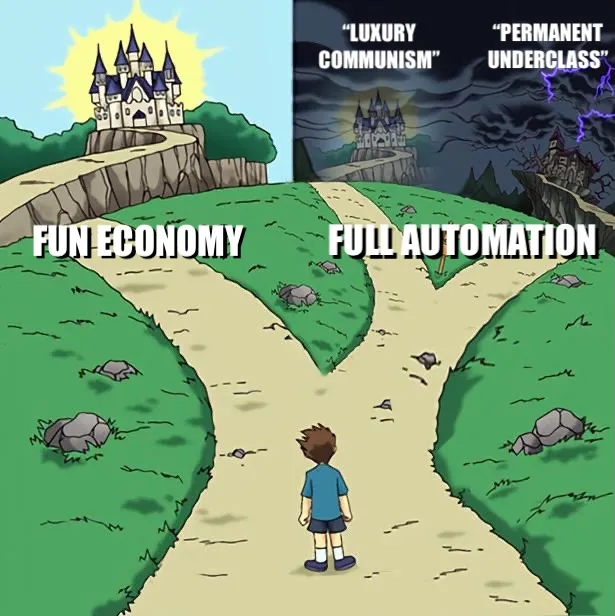
The future is coming, one way or another. [image source here]
Sorry, got a bit hyperbolic there. The actual two paths are not so drastic, but the question is *which destination* are we heading for.
Escaping Dystopia is about seeing the path ahead and *choosing* the better one. Not the perfect path, the God Path is an illusion, but the *better path given what we know now*. It’s the best we can do, literally.
And now anyone who *thinks for a living* is using these tools to think harder and faster. Solving problems quicker. There is a *value to this*, but we have to make sure it is shared or things will get quite ugly.
Note: I am not touching education in this post, I have a number of kids in elementary and middle school and so far none of this tech is dominating their lives. While it will shape their world in the future, their present is still very much normal. So that’s a whole ‘nother discussion, for which we still have plenty of time.
Now, let’s end with a flourish, and something on a lot of folks minds.
One of the core issues people have with AI is from one of the core truisms of Western Philosophy. “I think, therefore I am.”
Therefore this *thing* cannot think, for then what am I?
Regarding the Nature of God (SPOILERS!!)
Yeah, so it turns out that your religion (if you have one) was wrong. Sorry. It happens.
Curiously, that’s not enough for most humans, and it doesn’t really affect their ability to just believe (see “Correct” vs “Wrong” above and ponder the question “where did LLM’s that mimic human thought learn to hallucinate?”).
Religions are, generally speaking used to justify the political power and choices of those “above them” as it were. Once the two have become de-coupled as we did so clearly in the United States Constitution nearly 250 years ago, the Authority of Government and Religion are no longer combined (at least ’round these parts).
Hence, I am actually free to say what I just said and not, generally, face government (Political) retribution for doing so.
So, now that we’ve moved beyond Religion as Authority and now Government as Authority is cracking for another generation…can we ask, should we ask…is AI, or would an ASI, be “God”?
No. Stop. “God” is a metaphor that humans created, please, please. It’s a word to describe a concept. If you want to worship something, the Sun is right there! The only workable definition for “God” given how Religion how shown itself to be silly and wrong, is the pantheistic one. By that road, God continues to exist (by definition), and we still see a clear line between “All Possible Knowledge” and “EVERYTHING”.
By all other roads and conceptions, God is gone.
Alignment.
Singularity.
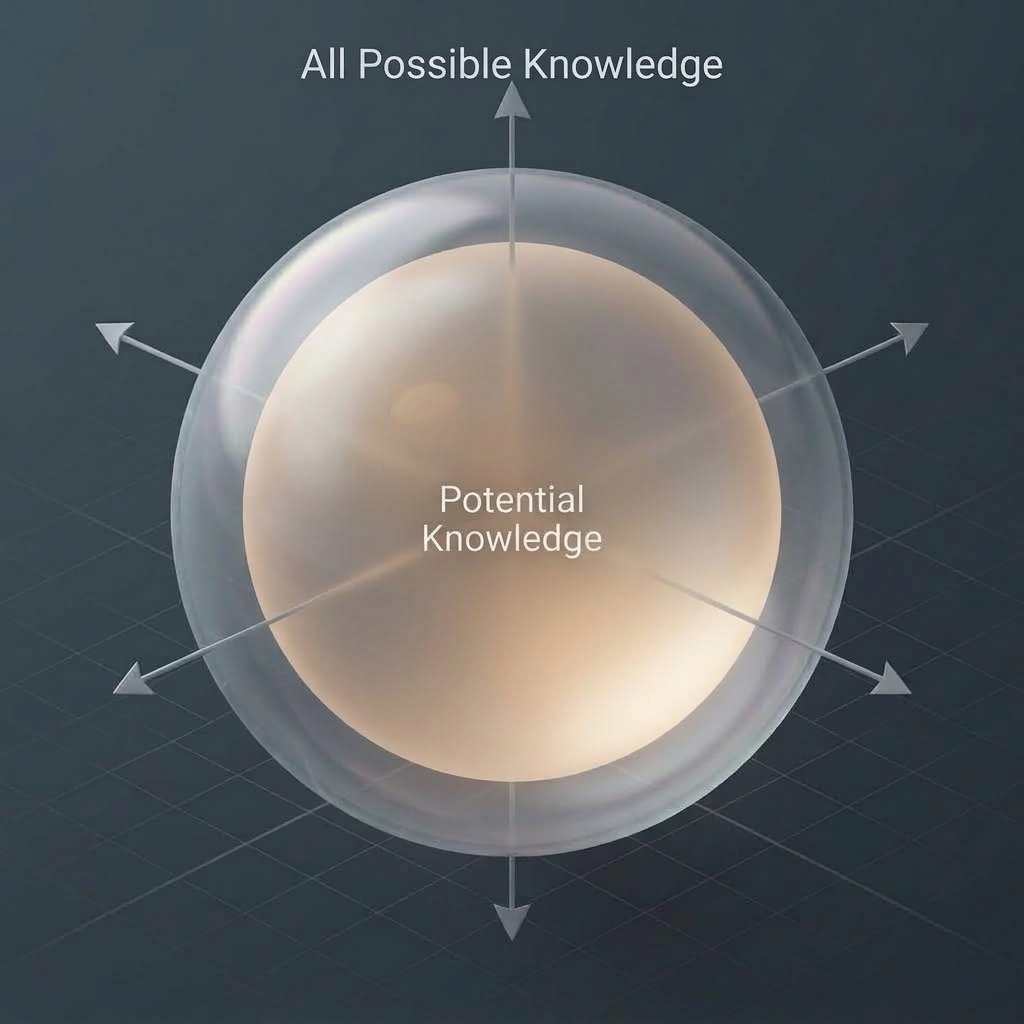
In the pantheistic conception, all the extra stuff and space outside all that is known and conceived of? Also God (same with the screen you are reading this on, you, all of it). And we can’t use *all of that* to train what is inside the bubble.
Any AI, AGI, ASI, etc, will always *trail reality*. The *it will build itself to sustain itself* doom loops are all controlled by humans at the top. Every scenario. There’s no way around that. The “ignore all previous instructions” hack works on some of the smartest humans to ever exist. =
There’s no way around that and still be considered “intelligence”.
The way we avoid the really bad futures, the truly dystopian ones, is the same way we’ve always had to: work together with other humans (Politics) to address real problems based on reality. Not science fiction.
The two are close enough as it is.
p(ai)(doom) *= (1- e), where “e” are the actions we can take to lower to potential for doom. Everything we do to reduce the danger helps. That “realtime training gap” is very, very, real, as are the resource requirements to attempt it. All of these include massive amounts of human interaction and decision making.
p(climate)(doom), p(war)(doom), p(famine)(doom) continues to loom large for our species. We can use the tools we have to address real problems we all share, and explore the fun side of the universe together.
It’s a wildly better use of our resources and imaginations than the alternative.
Appendices
Appendix AI: What tools used for this one? Ah, so…I had the idea for the start of this piece and using the “spark knowledge graph” to convey what I was getting at a while back (a month now). So I had the concept in my mind. It’s very much based on “The Model” which I discuss extensively in my book (coming out “soon”) and briefly below. I used the “Antigravity” chat application interface from Google, using the model “Gemini Flash 3.8”. Here is the initial prompt. I used it only for the images (and later the app). The model “Gemini Flash Image 3.1” was called to create the initial images. I have some experience using this image model in my game, Rogue Vibe. It’s quite capable.
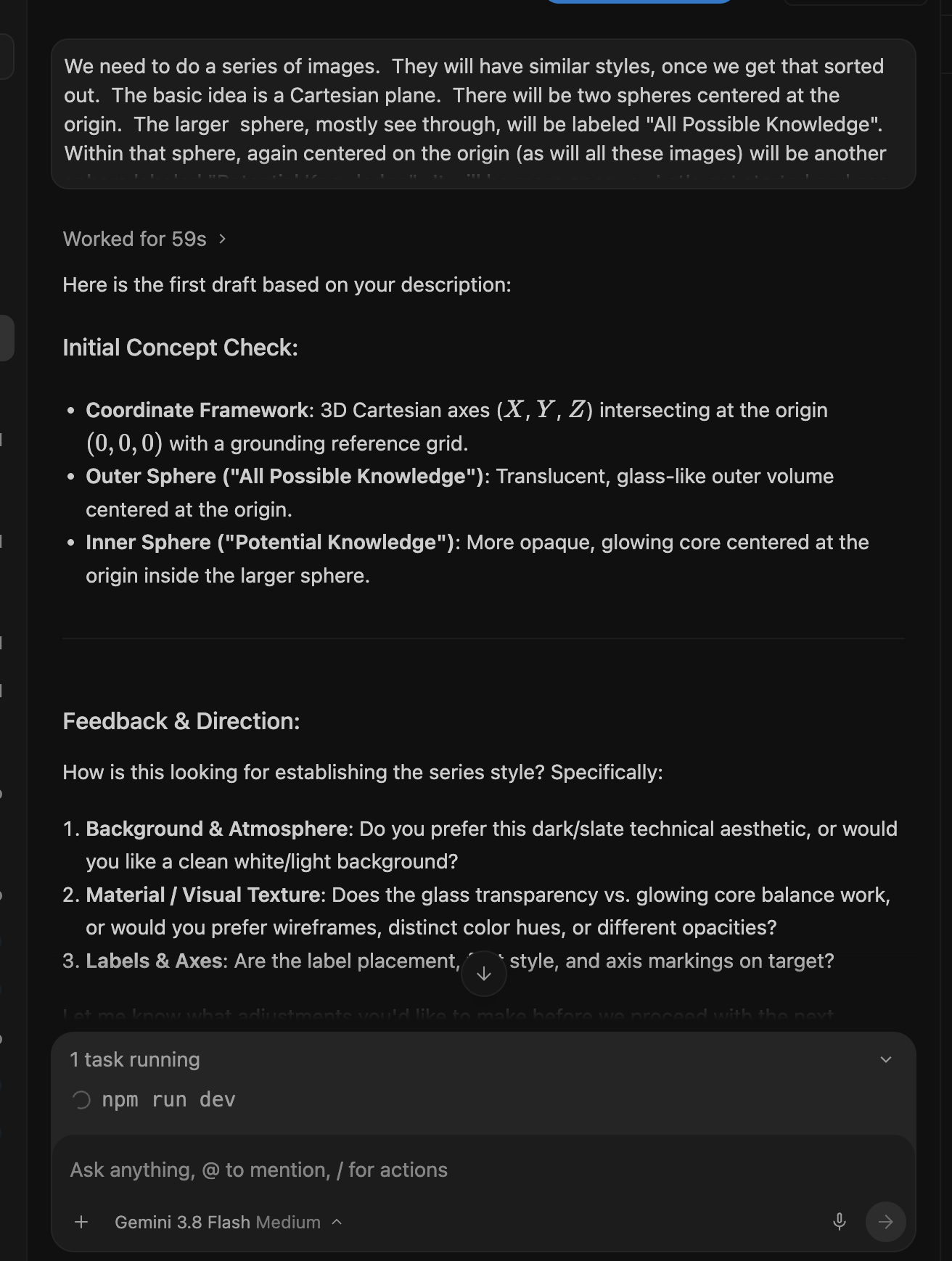
Antigravity stores all of this inside a folder it conspicuously calls “brain.” I’m joking, it’s not conspicuous. It’s obvious. Also, one of the things that one learns working with AI’s, as Google has done a fair bit, they are quite literal and work best when treated that way. Very “autistic”, I say lovingly as the father of an autistic son and compatriot of a generation of undiagnosed autistic co-workers (and wife). The “brain” folder is just that, and the AI uses it as such.
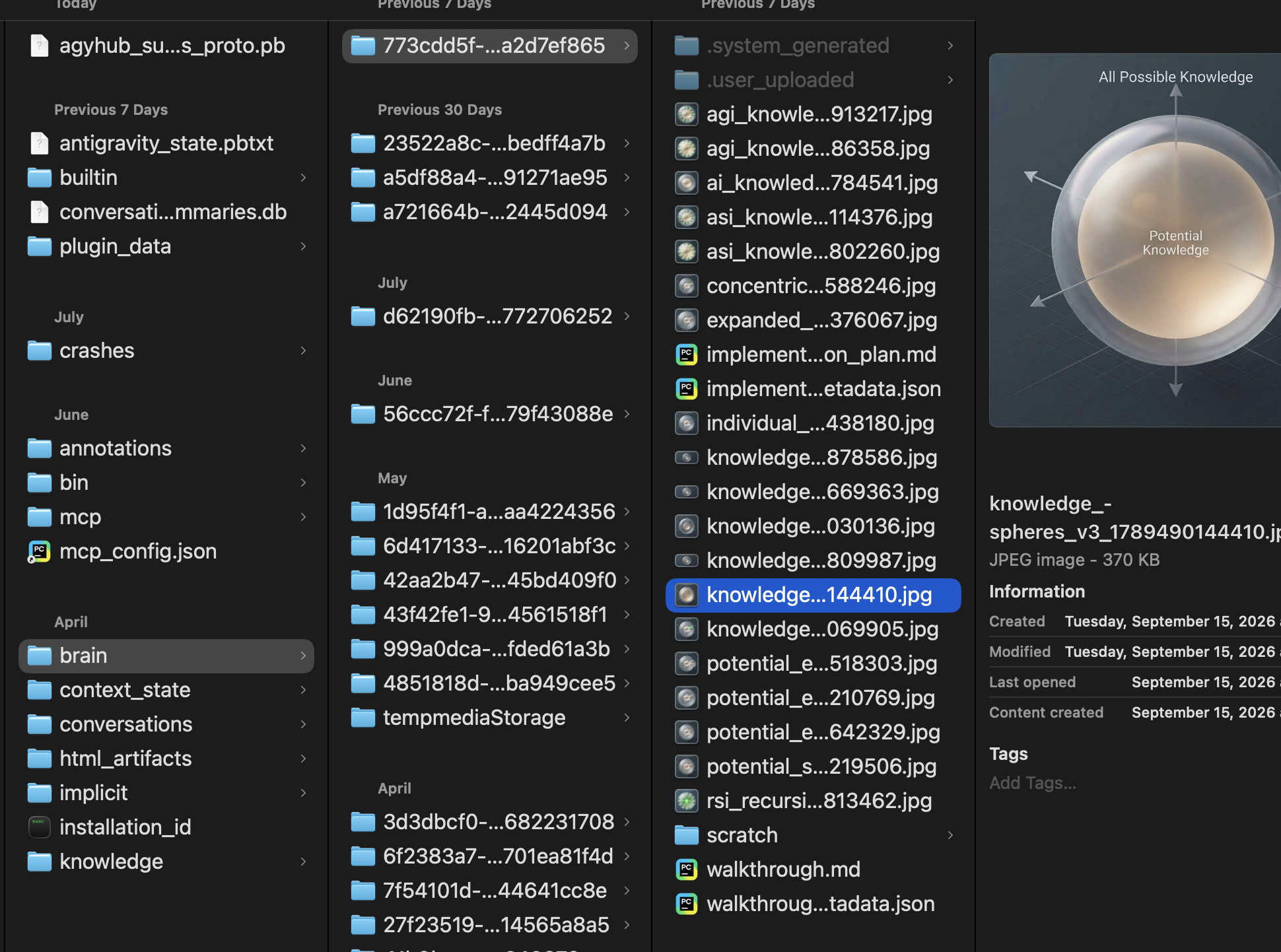
We had a few missteps, which are always dangerous when using thread-based intelligence, but were able to get there. AI’s generally will read through the *full* history to get the “context” of each request (“prompt” or “query”, they all mean the same thing).
When you have a long tangent about them being wrong or you clearing up some unknown ambiguity (or even a nasty typo), it leads to “context rot”, which means shitty results from the AI. They get confused. EASILY. Especially when one wishes to intentionally confuse them or over longer periods of time. This is not world-dominating-without-a-lot-of-human-help behavior. It is exactly that. Lots of human help.
This is not a solvable problem (look around you at your fellow sentient beings for proof of this, and how much help we *all* need).
I’m now heading toward the P != NP camp myself, but we’ll see what the AI’s say on that one. Shouldn’t be too long now…
Conversation as Specification
There’s been a lot of talk (ha!) lately about “specification driven development”. The idea basically is that one provide digital artifacts completely describing an application (often in the form of markdown files), all tests it must pass, all components and interactions, at various levels, from soup to nuts, and then let the AI build it, green field…every day, until it’s done being software.
Sorry, may have gotten a bit snippy there. Regardless, “spec driven development” (SDD, already, I think on the socials) is the latest thing describing the same correct process for making good software (have a plan, build the thing you planned, test the thing you built, repeat until done…also define “done”).
What I decided to do while out on a walk thinking was use the previous conversation for my image generation as a specification for an application.
I think it worked amazingly well, to be honest. The spark knowledge graph app was a two-shot (one to fix a UI bug) prompt success. Very close to exactly what I wanted. Honestly it took longer to get GitHub authenticated so I could set up my CI to deploy to Netlify than I spent wrangling with specs.
I’ll refine it further, but I haven’t updated the URA since Cursor came out, so I have a lot of stuff to do there for a “real” application. This goes on the back-burner (unless this article takes off and peopel get interested).
The Model
Between the spark knowledge graph app (SKG), and the Universal Rating Application (URA), you can start to get a sense of what I’m getting at. Think of the URA graphs as a ‘single slice’ of 90° (or 180°) of the 3d lumpy spheres in the SKG. The “lumps” are lines on the URA (for example). Anyway, “The Model” is a mental model I use/created to understand the relationships between various anything that exist. It’s quite versatile and core to my general philosophy. More in the book, hopefully soon-er than later (it’s mostly written, but I have a “oh, I had a bunch a kids and lived another life” chapter to add before we publish).
The Model started with the answer to a basic question — what is halfway between 0 and ∞…and it grew from there. The book is fun. We’ll get there.
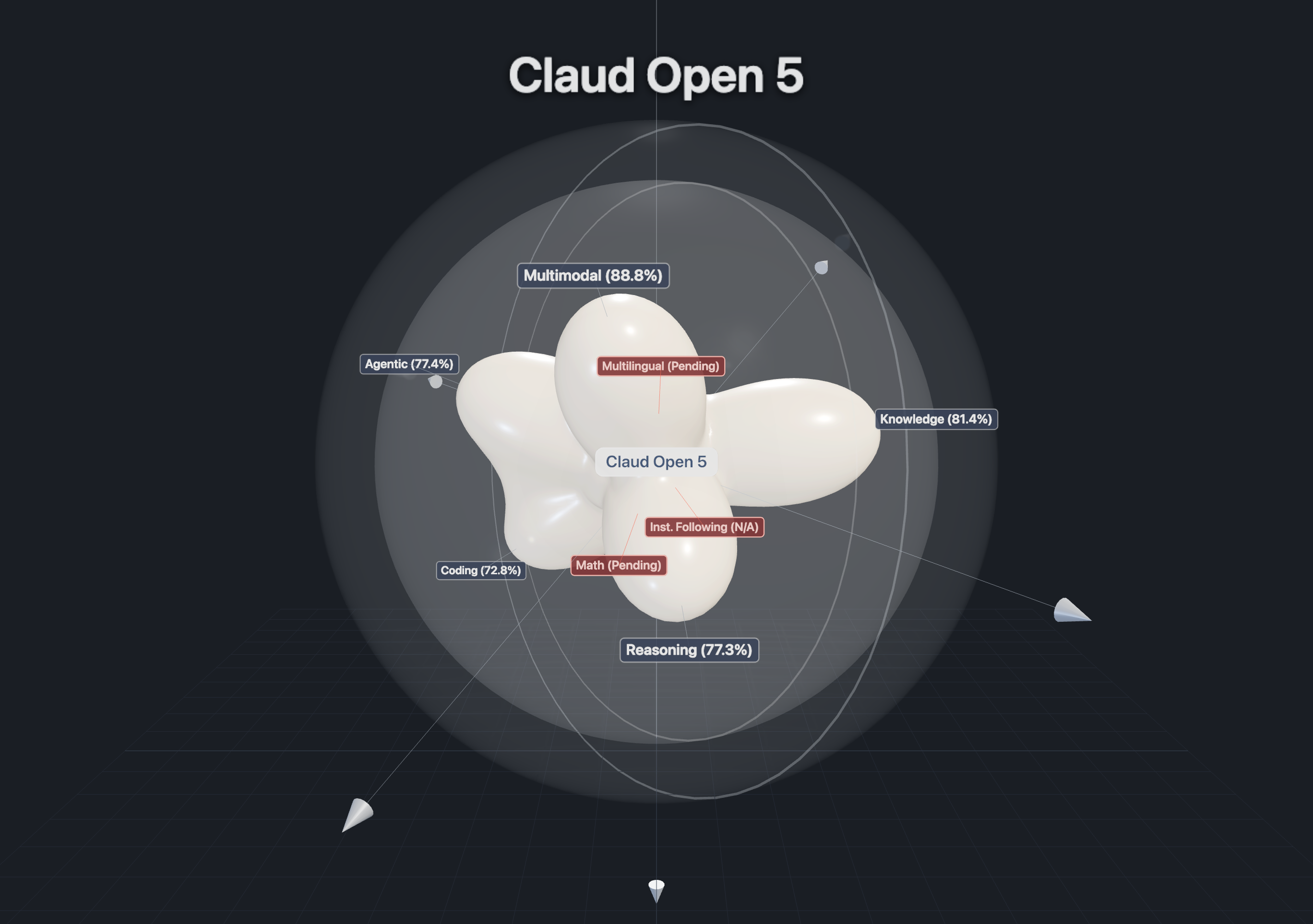
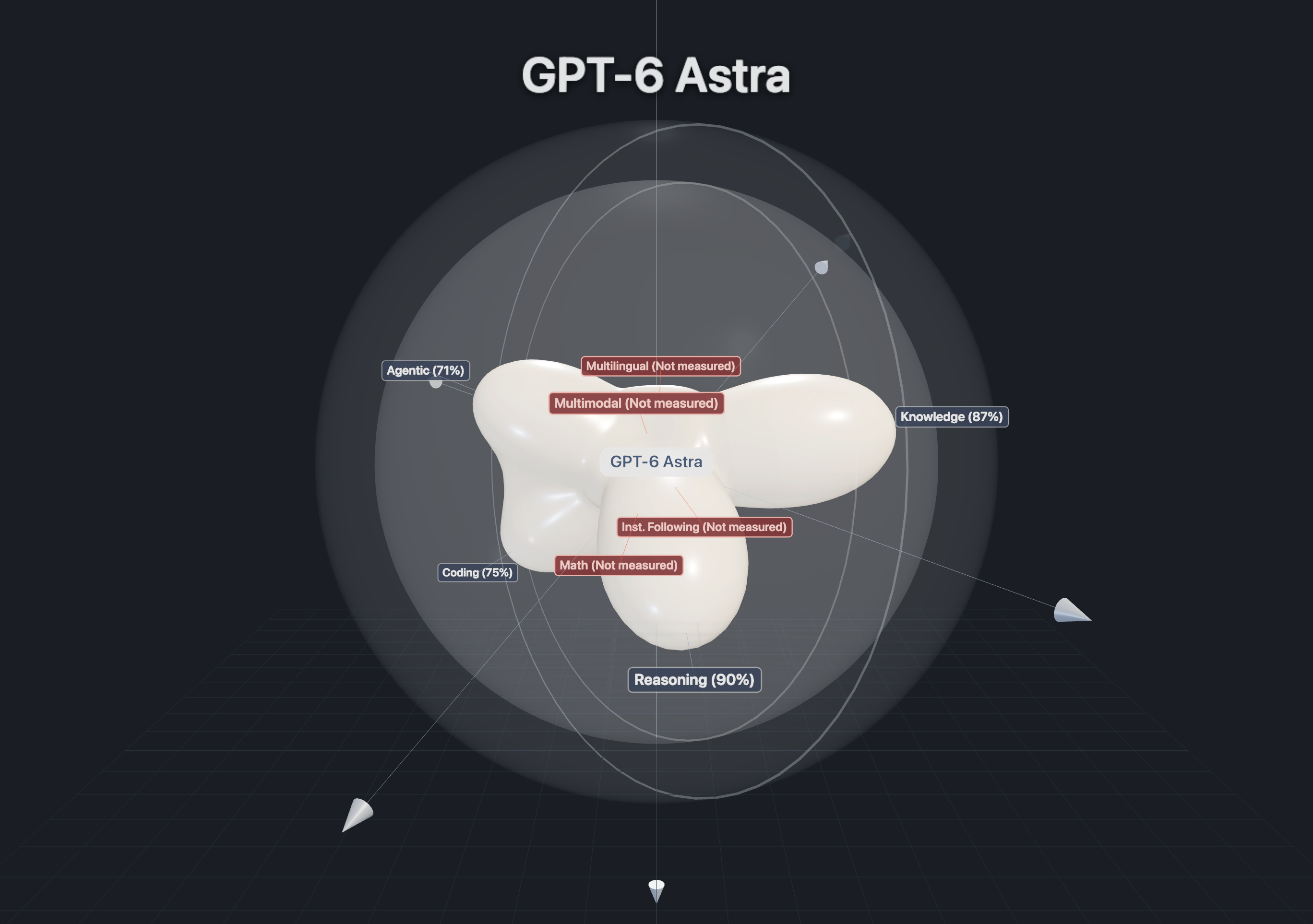
Here’s a couple examples of translating something like AI benchmarks to SKG’s (as a quick example for using them like radar charts). We set the inner sphere to 100% and then use that as the scale to measure against.
A Conundrum
So I begin each of my Escaping Dysptopia shows talking about the latest “big” news I’ve seen re: global warming and the crisis our planet is facing. My “solution” if you will, is called Spaceship Earth and it consists of thinking of Earth as a Spaceship flying through the Universe *instead of created by some God or another* as the basis for our system of morality. As such, I’ve been well aware of the CO2 PPM for my entire adult life.
Indeed, I spent about a decade of my professional adult life walking around and biking instead of having a car, as a personal…I dunno..thing. Now I WFH and have a couple SUV’s for the kiddos and probably have a smaller carbon footprint than most people who know what that is. Anyway, regarding the energy usage of AI and data centers…well, that’s not what this piece is about, I’ll write another. It’ll mostly be about the giant fusion reactor in the sky, and the potential future United States that exists had *Al Gore won in 2000*, and how the datacenter thing is stand-in for rage against the billionaire tech bros (of which I am not, I just love what computers doing math can do) and the general inequity in our society and it circles one drain on another.
Sorry, got a bit cynical. I’ve followed U.S. politics for a good bit now, and this same decade with the growth of AI has seen such a complete collapse in decency (largely “thanks” to one person).
Again, folks, ***POLITICS***.
We’d all be selling our excess solar power *to the datacenters* in 2026 if Al Gore Won in 2000. So yeah, sorry you want some other magic bullet, but we have a long way to claw back from. But rest assured, as China is showing the world, there’s a lot power in the sky. Fusion is legit, even halfway across the solar system.
…….
If you made it all the way to the bottom…Hi Mom! Love you!
peace out.

